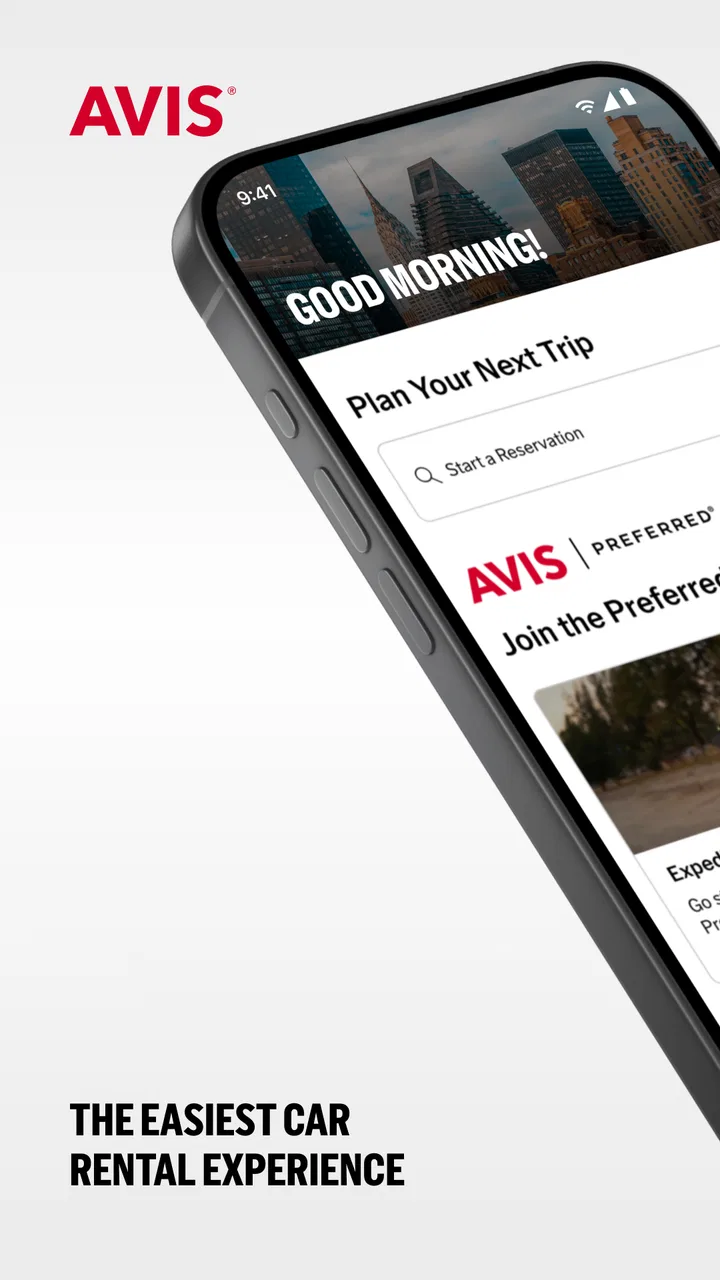
Avis Car Rental
- 4.5
- Rating
- 1.00M
- Installs
- Free
- Price

 Analysis by App-foxy
When I need a rental car without turning the booking process into a separate travel project, Avis Car Rental is the kind of app I would open first. It is a focused travel and local transportation app from Avis Budget Car Rental LLC, built around airport and nearby car rentals rather than trying to become a complete trip planner. That narrow purpose is its biggest strength: I can concentrate on finding a vehicle and organizing a rental instead of sorting through unrelated travel tools.
My overall view is positive, but with an important qualification. This is most useful when I already know I want an Avis rental and need a practical mobile starting point. It is less compelling if I am still comparing every rental company, searching for the absolute lowest total cost, or trying to manage an entire journey from one application. In those situations, a broader travel service or direct browser research may offer a wider view.
What stands out when using Avis for a rental
The app feels designed for a very common travel moment: I have flights, accommodation, and a destination in mind, but I still need transportation. Airport rentals are clearly central to the experience, yet the local rental angle matters just as much. Someone visiting family, replacing a car temporarily, or needing transportation for a weekend can use the same general approach without beginning at an airport.
You May Also Like

 Blood Strike: 2.5 Anniversary
Blood Strike’s Loadouts Turn Every Drop Into a Tactical Gamble
A close look at Blood Strike’s custom loadouts: how fast access to signature weapons reshapes its battle royale rhythm, rewards preparation, and narrows the gap between fights.

 Pandora - Music & Podcasts
Pandora’s Music Is Easy to Start, but Harder to Recover
Pandora’s strength is its low-effort path from a seed to a station. Its weak spot is how much confidence it asks you to place in connection, setup, and quiet recovery.

 8 Ball Pool
 Is Built on Rivalries, Rematches, and Routine
A close look at the rivalries, rematches, shared routines, and unanswered safety questions that turn a quick pool match into a persistent mobile community.

 Samsung Music
’s Quiet Strength Is Playing What You Already Own
Its reach comes less from spectacle than from dependable access to a personal library. That simplicity is both the app’s strongest retention engine and its ceiling.

 AccuWeather: Weather Radar
AccuWeather Review: A Quick, Clear Forecast for Everyday Decisions
For everyday plans, the best forecast is the one you can understand quickly. AccuWeather makes rain timing, radar, and local conditions easy to act on, with a few trade-offs.

 Hill Climb Racing
Why Hill Climb Racing Still Turns Crashes Into One More Run
A tiny car, a bumpy hill and one more upgrade: Hill Climb Racing keeps resurfacing because its simple chaos makes every near-miss feel personal.
More From Our News Desk



I also like the directness of the service. A rental app should reduce the number of decisions between “I need a car” and “I have a reservation to review.” Avis keeps its identity clear instead of burying car rental inside a larger collection of travel products. That makes it easier to return to the task later, especially when I am checking plans on a phone rather than sitting at a computer.
The app is free, which removes an obvious barrier to trying it. Its Everyone content rating also makes it suitable for a broad audience, although the actual ability to rent a vehicle naturally depends on the renter, location, and rental requirements rather than on the app’s age label. That distinction is worth keeping in mind: a simple download does not mean every user will qualify for every rental.
Its reception suggests that many travelers find the mobile experience worthwhile. Avis Car Rental holds a 4.6 average from about 34 thousand ratings, with roughly 6.7 thousand written reviews, and it has passed one million installs. I would not treat those figures as a guarantee of a smooth experience on every trip, because rental outcomes also depend on the branch, vehicle availability, timing, and booking details. Still, they indicate that this is an established tool rather than an obscure companion app.
Why the mobile format helps before a trip
The most useful benefit is having the reservation process close at hand while plans are changing. I can imagine checking a rental after a flight time moves, reviewing the pickup location while organizing an itinerary, or confirming that the selected branch is actually convenient before committing. A phone is especially practical for travelers who make arrangements in short gaps: at home before leaving, during a connection, or after arriving in a city.
There is also a psychological advantage to keeping the rental inside the company’s own app. Instead of relying entirely on a third-party comparison page, I can move from searching to dealing with the rental provider in one place. That does not automatically make the booking cheaper, but it can make the responsibility clearer. If I choose Avis, I know which company’s rental flow I am entering and which brand’s policies I need to read carefully.
One useful habit is to treat the app as a planning checkpoint rather than a last-second impulse tool. I would select the pickup area first, compare airport and local options where both are practical, and then inspect the reservation details before finalizing. An airport branch may be convenient after landing, but a local branch could be a better fit for someone staying in a city and not needing a car immediately. The app’s two main use cases therefore support different travel styles.
A realistic airport scenario
Imagine I am flying into a city for several days, staying outside the downtown area, and planning visits that public transportation will not cover comfortably. Before leaving home, I can use Avis to look for an airport pickup, consider whether the location works with my arrival plans, and keep the rental information available on my phone. If my accommodation is closer to a local branch, I can think through whether taking a taxi or transit first would be less stressful than collecting the car directly at the airport.
That choice is more important than it sounds. Picking up at the airport can save a separate transfer, but it may also add complexity to an already tiring arrival. A local pickup can make sense when I am spending the first night in the city and only need a car later. The app is valuable here not because it makes the decision for me, but because it puts the relevant rental locations into the same planning conversation.
My practical tip would be to review the pickup and return locations as carefully as the vehicle selection. A car that looks suitable is not useful if the branch requires an inconvenient detour or creates a difficult return on departure day. I would also keep the reservation details accessible before reaching the counter, since airport arrivals are rarely the best time to reconstruct a booking from memory.
Where Avis compares well with broader travel apps
Compared with a general travel app, Avis has a clearer purpose. Broad platforms are helpful when I want to compare airlines, hotels, rental companies, and other transport choices in one search. They can be better at giving me a market-wide overview. Avis, by contrast, makes more sense after I have decided that an Avis rental is worth considering.
That difference affects how I would use it. For a first search, I might compare several providers through a neutral travel service, especially if price is my main concern. Once Avis becomes one of my preferred options, its dedicated app is more relevant because it keeps the process centered on that company rather than presenting a long list of alternatives.
Compared with using a mobile browser, the dedicated app feels more purposeful for repeat use. I do not have to begin with a general search, identify the correct Avis page, and work through a cluttered set of browser tabs. The advantage is modest for a single rental, but it becomes more noticeable when I travel regularly or want a familiar place to begin each time.
There is a trade-off, though. A company-specific app naturally gives me less neutrality than a comparison service. It is not the right tool for answering, “Which rental company is best for this destination?” It is better suited to, “Can I arrange an Avis rental that fits this trip?” Understanding that distinction prevents disappointment and keeps the app in its proper role.
The friction I would not ignore
The main weakness is the same narrow focus that makes the app easy to understand. If I want to compare a wide range of providers, vehicles, or local alternatives in one place, I need another tool or additional research. Avis can support a rental decision, but it does not replace independent comparison when the total cost, branch convenience, or availability across companies is the deciding factor.
Rental bookings also contain details that are easy to skim on a small screen. Pickup times, return timing, location choice, vehicle category, and the conditions attached to the reservation all deserve deliberate attention. I would not blame the app alone for the complexity of renting a car, but a mobile interface can encourage quick tapping when a careful reading is more important. The convenience of the phone should not turn into careless confirmation.
Another limitation is that the app cannot remove real-world uncertainty. A digital reservation is only one part of the experience. The branch still matters, the selected location still matters, and the practical conditions of the trip still matter. I would use the app to organize the rental, not to assume that every airport or local pickup will feel identical.
This is also why I would avoid making a booking at the very last moment unless I had no alternative. A rushed search leaves less time to compare pickup points, reconsider whether I need a car for the entire trip, or notice an inconvenient return arrangement. The app makes mobile booking possible, but it cannot create extra vehicles or extra time.
Small workflows that make it more useful
My first recommended workflow is to separate transportation need from vehicle impulse. Before searching, I would decide which days actually require a car. If I am staying in a walkable area for the first part of a trip, renting only for the days outside the city may be more sensible than collecting a vehicle immediately. Avis is useful for checking the rental itself, but the savings in time and hassle come from planning the usage honestly.
Second, I would examine airport and local pickup choices as competing plans, not as interchangeable map points. For an early arrival, airport pickup may be convenient. For a late arrival or a first night near the center, a local branch could produce a calmer schedule. This is a concrete way to use the app’s coverage of both airport and local rentals rather than automatically selecting the most familiar option.
Third, I would review the return plan before confirming the pickup. Travelers often focus on how they will get the car and postpone thinking about how they will give it back. I prefer to imagine the final morning in detail: where I will be staying, how much time I will have before a flight or appointment, and whether the return location fits that route. A rental that works on arrival can still be awkward at the end.
Finally, I would keep the app as a reference during the trip, not merely as a booking screen used once. Having the rental information available can be helpful when I am moving between airports, hotels, and local stops. Even without turning the app into a full travel organizer, that central access reduces the chance that the reservation becomes buried among email messages and browser tabs.
Who should choose it, and who should look elsewhere
I think Avis is a strong fit for travelers who already trust the brand, want a direct route to an Avis rental, or regularly need cars at airports and local branches. It is also a sensible choice for people who prefer handling travel arrangements on a phone and want a dedicated place for the rental instead of repeatedly searching through a browser.
It should appeal to business travelers who make similar rental arrangements often, families who want to check transportation plans before departure, and visitors whose destination is difficult to navigate without a car. The app’s straightforward purpose can be more valuable to these users than a crowded travel platform filled with unrelated booking categories.
I would be more cautious if I were a strict price shopper. In that case, I would compare Avis with other rental companies before deciding, because a dedicated provider app cannot give me the same neutral overview as a marketplace. I would also look elsewhere if I wanted one application to coordinate flights, hotels, rail travel, activities, and car rentals together.
Someone who rarely rents a car may not gain much from installing a dedicated app for a single straightforward booking. A browser can be sufficient if the rental is simple and I do not expect to return to the service. The app becomes more convincing when its convenience is repeated across planning, reservation review, and travel-day reference.
Compatibility, maturity, and everyday practicality
The app has been available since March 12, 2012, so it comes from a mature mobile product rather than a newly launched experiment. The current version is 22.4, and it supports Android 7.0 and later. That broad operating-system reach is useful for travelers who keep an older phone as a backup or do not upgrade devices frequently.
At the same time, older device support does not guarantee that every phone will feel equally quick or comfortable. I would still install it before the travel day, sign in or prepare the booking process in advance, and make sure my phone has enough battery when I need the reservation. That is ordinary travel preparation, but it matters more when the app is being used at an airport or outside familiar surroundings.
Because it is free and rated for Everyone, trying the app carries little commitment. The meaningful question is not whether it costs anything to download; it is whether a dedicated Avis workflow matches the way I rent cars. If I usually compare multiple companies, the app will be one part of my research. If I already intend to rent from Avis, it becomes a much more natural first stop.
My verdict is that Avis Car Rental succeeds by staying close to a real need: arranging airport and local car rentals from a phone without unnecessary detours. I appreciate the focused experience, the usefulness of having rental planning available while traveling, and the flexibility of considering both airport and local pickup situations. I also think its limitations are clear and manageable when I use it for the right job.
I recommend it to travelers who want a direct, dedicated Avis rental tool, but not as a replacement for comparing the wider rental market. Use it early enough to think through pickup and return locations, do not skim the reservation details, and consider whether you need a car for every day of the trip. With those habits, this free Travel & Local app is a practical companion for Avis customers rather than a one-size-fits-all travel solution.
FAQs for Avis Car Rental
01What features does the Avis Car Rental app offer?
The Avis Car Rental app provides a range of features designed to enhance your rental experience. These include easy booking, managing reservations, locating nearby rental locations, and accessing exclusive offers. Additionally, the app allows users to track their rental history and view receipts, making it convenient for frequent travelers and business users.
02Is the Avis Car Rental app available on both Android and iOS?
Yes, the Avis Car Rental app is available for download on both Android and iOS platforms. This ensures that users with different devices can access the app's features and services seamlessly. The app is regularly updated to improve performance and introduce new features, ensuring a smooth user experience across all devices.
03Can I manage my rental reservations through the app?
Absolutely. The Avis Car Rental app allows users to manage their reservations effortlessly. You can modify, cancel, or extend your bookings directly through the app. This is particularly useful for travelers with changing schedules, as it provides flexibility and control over your rental plans without needing to contact customer service.
04Are there any exclusive discounts available through the app?
Yes, users of the Avis Car Rental app often have access to exclusive discounts and promotions. These offers can be found directly within the app and are tailored to provide users with added value. It's a great way to save money on your rentals, especially if you frequently use Avis services.
05Is the Avis Car Rental app user-friendly?
The Avis Car Rental app is designed with user-friendliness in mind. Its intuitive interface makes navigation easy, even for new users. The app provides clear instructions and prompts, ensuring that booking and managing your rentals is straightforward. Customer reviews often highlight the simplicity and efficiency of the app's design.
Pros
- User-friendly interface for easy bookings.
- Wide selection of vehicles available.
- Flexible rental durations offered.
- Competitive pricing for budget travelers.
- 24/7 customer support accessible.
Cons
- Limited options in rural areas.
- Occasional app crashes reported.
- Delayed customer service response.
- No loyalty rewards program.
- In-app ads can be intrusive.

Avis Car Rental
Gallery